Trusting the God Who Never Demands that I Fake it
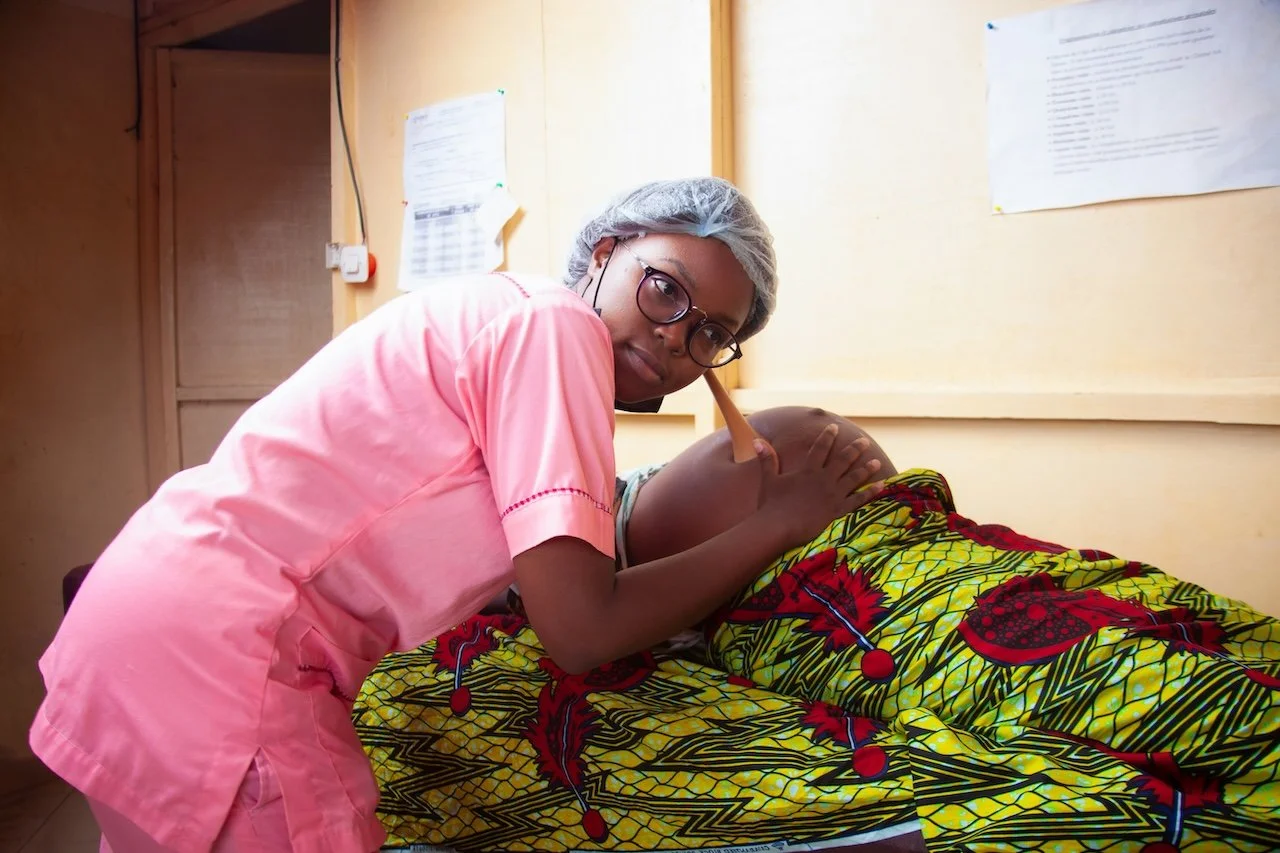
Photo on Unsplash by Iwaria Inc
Come and hear, all who fear God,
And I will tell of what He has done for my soul (Psalm 66:16).
The 10-month 2HC cohort journey for mission workers is divided into three main parts. We focus first on practices of the interior life, then practices of authentic friendship and community, and finally on practices of sustainable mission. Prior to the opening Retreat 1, the only assignment given is to complete a spiritual autobiography. Sharing these spiritual autobiographies in small groups at our first retreat begins to foster openness and camaraderie. Listen in as one of our current 2HC cohort members shares her story, chronicling her journey toward an honest faith.
by Christy
In nursing school you are told to fake it until you make it. No patient wants to hear that you are not sure what you are doing. You are taught to portray a confidence you do not feel, but that you will eventually gain through practice. In midwifery school, this is even more so the case. You are asked to assess a dozen different things about a fetus and a uterus that you cannot see. So you are taught to see with your fingers, palpating around on a big pregnant belly or in an awkward internal exam for information that you cannot see with your eyes. At first it feels like trying to distinguish a dessert fork from a salad fork through four layers of blankets. So you start out by faking it, because you have no idea what you are feeling.
In many ways, my faith journey has been the same, a lot of feeling around in the dark, trying to fake it until I make it.
It is not that I do not desire authenticity; I have always craved it. But I also have a strong desire to please. When I look back on my third culture kid[1] childhood, it can be hard for me to distinguish between what I believed and what I wanted to believe.
There were moments of genuine transcendent connection, but there was also pretending – pretending that my family was as happy as we said we were in our newsletters or pretending that I could remember the moment when I prayed a sinner’s prayer at age four. At one camp, I pretended to speak in tongues, as much for myself as for anyone else. I could not bear being the kind of person who was not open to the Holy Spirit.
None of it was an outright lie. I had no reason not to believe. I never doubted God’s existence. I could go through all the right motions. But I also felt like no one knew the real me. I felt like there was no space to doubt or question, or to have anything but a dutiful response to God. So for a long time, I experienced a guilt-ridden spirituality. I should read my Bible more. I should pray more. Most importantly, I should feel something like people around me were feeling in relation to God, when I rarely felt anything at all.
There were times when I tried to be more honest about my uncertainties, but I quickly realized that most people did not want my authentic self. They wanted to believe that I was fine and that I believed all the right things. My desire to please almost always won over my desire for authenticity.
It got me through my teenage years without any rebellion. It got me through a move to the US for college with good grades and a “calling to the mission field.” Looking back, I think my itch to leave the US (where I felt like a total outsider) was as strong as any calling.
I first came to health care out of a sense of urgency for the pain that I saw in the world. The world needed healers, and I was going to be one of them! But in the hospital room, I discovered a place of authenticity that unmasked all my own wounds. I craved healing too.
I began to call on God because I needed divine intervention, not just because it was the proper thing to do. I also found that those around me were more honest, more genuine, and more raw. There is very little room for pretense when it feels like your body is failing you. When someone is fighting for their life or is in the throes of childbirth, all but the essentials fall by the wayside. The act of living becomes so much more palpable. I discovered a Jesus who cared about real, concrete needs, not just about how spiritual I could be. For someone like me who has never been good at experiencing abstract spirituality, these times have been transformative in my ability to experience God’s presence. After spending the last decade working in African hospitals, I can say that my spirituality has been more strongly shaped by hospitals than anything else.
“I discovered a Jesus who cared about real, concrete needs, not just about how spiritual I could be.”
In the evangelical world in which I was raised, I have always felt like faith was boiled down to what I could intellectually agree to and the emotional hype I could muster about it. I had too many doubts to always have perfect intellectual agreement, and my personality could not muster the emotional hype.
But in places of suffering and pain, I found myself transformed by Jesus’ incarnation. It was never the abstract theology that captivated me, but the stories. Jesus, a vulnerable infant, taking his first breath, possibly coughing up some meconium. Jesus, the God of the universe, touching the rotting flesh of a leper’s wounds. Jesus, a single man in a patriarchal society, willing to talk about and – even more outrageously – to be touched by a bleeding woman. Jesus, who understands hunger and pain and suffering. This Jesus, the tired, dirty, breathing, sweating one, was the only God that belonged in a delivery room with unreliable water and electricity. The scandal of Jesus, born of Mary, was real to me when my 17-year-old patient told me her father would kill her if she went home with this baby. I needed the Jesus who truly saw and loved the Samaritan woman when my 20-year-old patient was bleeding to death from a violent marital rape. I needed a God who knows hunger, when my three-year-old patient died of malnutrition.
It has also been in the hospital, in the midst of so much possibility for loss, and suffering, and chaos, that the sacredness of life has continued to surprise me with its beauty and tenacity. I have witnessed hundreds of humans take their first breaths. The hearty cry of a newborn might be the greatest confirmation that God still lives and moves among us. Sometimes I have forced those first breaths through plastic Ambu bags into tiny blue mouths. Sometimes my efforts have been in vain. Many times I have felt the weight of guilt and shame when my efforts were fruitless. I have been present at many last breaths. It has given me a complete reverence for the mystery of life and what lies beyond. I would never presume to know exactly what is happening in the spiritual realm in those moments. But I know that when the Ambu bag is put down and we have stopped doing chest compressions, when I am telling a mother that her baby will never breathe or a husband that he will need to raise the child without a mother, I have desperately needed to believe that God’s mercy goes beyond anything that I could possibly understand. That once my hands have stopped touching these bodies, their souls are being offered a loving and compassionate embrace, regardless of what they intellectually agreed to when their brains were full of oxygen. Without that belief, I would not be here today – not in this cohort, not in this career, maybe not in any faith community.
The traditional mission calling frames witness as sharing Christ with the world. While I am quite open about my faith, my calling has been simply to be present. To witness suffering without turning away or shutting down. To witness love and beauty and strength in the most surprising places and let myself be shaped by that.
Recent political upheaval and a forced move for my family have found me grasping around in the dark once again. God’s presence remains palpable, like the undeniable reality of a third trimester pregnancy. But discerning God’s ways and God’s will in the midst of loss and chaos is confusing.
The word midwife means “with women.” It carries with it the ancient truth that a mother’s wisdom and strength go beyond what science can measure. The experienced midwife knows that even her best training cannot replace the intimate knowledge of the mother. So the midwife stands as a companion in the mother’s journey of learning to trust her own body, to trust the process. Can I step away from my professional role and let God be with me? Do I trust that God is doing something mysterious and beautiful in me in the midst of the unknown? Can I rest in the knowledge that God created me for this journey and will sustain me through it?
These are the labor pains of my life right now. So I close my eyes. I breathe deeply, sometimes groaning. I reach out and grab the hand of my God who is patient, loving and gracious, a God who never demands that I fake it.
______________________
[1] “A traditional third culture kid (TCK) is a person who spends a significant part of his or her first eighteen years of life accompanying parent(s) into a country or countries that are different from at least one parent’s passport country(ies) due to a parent’s choice of work or advanced training.” In Pollock, David C, Ruth E. Van Reken, and Michael V. Pollock. Third Culture Kids: Growing Up Among Worlds, 3rd ed. (Boston/London: Nicholas Brealey Publishing, 2017), 27-28.